Due to high demand, we are currently at full capacity & experiencing delays in responding to enquiries. We appreciate your patience and we will get back to you as soon as possible.
Get a quote
If you want to speak to someone instantly please call: 0417 616 883
Can you get a bidet through NDIS? What you need to know
6 May 2026
NDIS Bidet
If you or someone you care for is struggling with hygiene, mobility, or needing help in the bathroom, it’s only natural to start looking for better options.
And at some point, the question usually comes up… can a bidet be covered under NDIS?
The good news is yes, it can be!
But it’s not automatic, and it’s not as simple as choosing a product and sending through a receipt. There are clear conditions that need to be met, and the way it’s presented matters just as much as the need itself.
In this guide, we’ll walk you through how it works, what needs to line up for approval, and what participants, families, and support teams should be thinking about before moving forward.
Can a bidet be funded under NDIS?
Yes, a bidet can be funded under NDIS if it meets the criteria of a reasonable and necessary support.
To qualify, the bidet must be directly related to your disability and demonstrate a clear improvement in your ability to manage personal care tasks such as toileting and hygiene. Supporting evidence is typically required to show functional benefit and alignment with your NDIS plan goals.
In this context, bidets are generally considered NDIS assistive technology. When appropriately recommended, they can help reduce reliance on carers, improve hygiene outcomes, and support safer bathroom use.
Funding may come from:
Core Supports, for lower-cost or everyday assistive items
Capital Supports (Assistive Technology), for higher-cost or more specialised equipment
Approval depends on the strength of the supporting documentation and how well the bidet addresses a specific, disability-related need.
When a bidet may be considered appropriate
A bidet would be considered under NDIS when there is a clear, functional need linked to personal care and safety in the bathroom.
Some of the most common situations include:
Limited mobility or flexibility
Difficulty bending, reaching, or maintaining balance when using the toilet
Difficulty maintaining hygiene
Inability to clean effectively with toilet paper, leading to ongoing hygiene concerns or skin irritation
Reliance on carers for toileting
Needing regular assistance for personal hygiene that could be reduced with the right support equipment
Risk of strain, injury, or falls
Physical effort required for wiping increasing the risk of overreaching, instability, or injury
Reduced dexterity or strength
Conditions affecting hand function, such as arthritis or neurological disorders, making wiping difficult or inconsistent
In these scenarios, a bidet may support safer, more consistent hygiene while helping maintain comfort and a greater level of independence.
What needs to be in place for approval
For a bidet NDIS request to be approved, there needs to be clear supporting evidence that shows both need and suitability. This goes beyond simply choosing a product.
Here’s what typically needs to be in place:
Occupational therapist (OT) assessment and report
An OT must assess your situation and formally recommend the bidet. The report should clearly explain your functional limitations and how the bidet will improve your ability to manage personal care.
Clear problem and solution justification
The application needs to show a direct link between the challenge (for example, difficulty with hygiene or mobility) and how the bidet addresses it. General benefits are not enough, it must be specific to your condition.
Alignment with NDIS goals
The bidet should support goals already outlined in your plan, such as increasing independence, improving safety, or reducing reliance on carers.
Suitable bathroom setup
The home environment must be appropriate for installation, including plumbing, space, and electrical requirements where needed. Unsuitable setups can delay or impact approval.
The stronger and more specific the supporting information, the more likely the request is to be considered.
Common misconceptions about bidet NDIS funding
“A bidet is just a bathroom upgrade”
Under NDIS, a bidet needs to be justified as assistive technology that supports personal care. It must relate directly to functional limitations caused by a disability.
“Any bidet will be approved”
The type of bidet matters. The product needs to match the participant’s level of mobility, strength, and support needs, not all models are suitable.
“You can buy it first and claim it later”
In most cases, approval and supporting documentation are required before purchase, especially for higher-cost items or NDIA-managed plans.
“An OT mention is enough”
A brief recommendation is usually not sufficient. The supporting report needs to clearly outline the problem, expected outcomes, and why a bidet is the appropriate solution.
Understanding these points early helps set realistic expectations and avoids unnecessary delays in the process.
Need help choosing a bidet?
Get expert advice and a quote from our Perth-based specialists.
Even when a bidet seems appropriate, there are several factors that can delay or prevent an NDIS request from being approved. Most of these come down to gaps in documentation or choosing the wrong solution.
Lack of clinical evidence
If the OT report does not clearly explain the functional limitation and expected outcome, the request may not meet the reasonable and necessary criteria.
Weak or generic justification
Applications that rely on general benefits, rather than a specific problem and measurable improvement, are less likely to be approved.
Incorrect product selection
Choosing a bidet that does not match the participant’s needs, for example requiring dexterity they do not have, can lead to rejection.
Ignoring installation requirements
Electrical access, plumbing compatibility, and overall bathroom suitability need to be considered. If the setup is not viable, approval may be delayed.
Treating it as a standard purchase
Submitting a quote without proper assessments, reports, or alignment with plan goals can slow down the process or result in a declined request.
How to get started with a bidet through NDIS
Getting a bidet approved through NDIS starts with the right preparation. Taking the time to line things up properly can make the process smoother and reduce delays.
1. Speak with your OT or support coordinator
Discuss your current challenges and whether a bidet is appropriate for your needs.
2. Assess your bathroom setup
Confirm your space can support installation, including plumbing, layout, and electrical access if required.
3. Identify the right system
The bidet should match your level of mobility, strength, and support requirements, not just general features.
4. Obtain a detailed quote and supporting documentation
This should include product specifications and any installation considerations.
You can also use a structured checklist to make sure nothing is missed. We’ve put together a simple evaluation checklist that helps participants, families, and support teams organise the key information typically required for a bidet NDIS request.
5. Submit through the correct NDIS pathway
Depending on your plan, this may be through a plan manager, support coordinator, or directly to the NDIA.
Taking a structured approach helps ensure your application is complete and aligned with NDIS requirements from the outset.
Making a bidet work within your NDIS plan
A bidet can be a valuable piece of assistive technology under NDIS, but approval comes down to how well it supports your specific needs, your goals, and your overall setup.
From our side, working with Perth homeowners and assisting on installs tied to NDIS-related needs, we’ve seen firsthand what gets across the line and what doesn’t. It’s often the small details, like choosing the right system and ensuring the space is suitable, that have the biggest impact.
At Bidet Specialists Perth, we supply a range of accessible NDIS bidet solutions and can help you choose a system that fits your needs, your home, and your level of independence. We also handle professional installation, making sure everything is set up safely, correctly, and in line with Australian standards.
FAQs
Do you install NDIS bidets in Perth?
Yes, we provide professional bidet installation across Perth and surrounding areas. We work with participants, families, and support teams to ensure the system is installed safely and in line with Australian standards.
Can an NDIS bidet include installation costs?
In some cases, installation may be included as part of the overall support if it is required for the bidet to function correctly. This depends on your plan, the type of bidet, and how it is documented in your application.
What type of bidet is best for NDIS participants?
The right bidet depends on the user’s mobility, strength, and level of independence. Electric bidet seats are often suitable for hands-free use, while simpler systems may suit users with more dexterity. An OT recommendation is typically required.
Do I need approval before buying a bidet through NDIS?
Yes, in most cases approval should be obtained before purchasing. This ensures the bidet meets NDIS requirements and avoids issues with reimbursement or rejected claims.
Can you help choose the right NDIS bidet?
Yes, we supply a range of accessible NDIS bidet solutions and can guide you in selecting a system that suits your needs, home setup, and support requirements.
Ready to find the right bidet?
Talk to our Perth team about supply, installation or an NDIS-ready quote.
What your OT report should include for NDIS bidet funding
14 September 2026
NDIS Bidet
Your occupational therapist (OT) report is one of the most important documents in an NDIS bidet funding application. It explains how your disability affects your daily toileting routine and why a bidet has been recommended to support your independence, safety and hygiene. In this guide, we’ll walk you through what your OT report should include, […]
If you’re an occupational therapist or support coordinator looking to make a confident OT bidet recommendation in Australia, there are a few things to note before deciding. The bidet seat needs to be WaterMark certified, and the installation needs to comply with WA backflow rules. It’s important to understand when a bidet recommendation is appropriate, […]
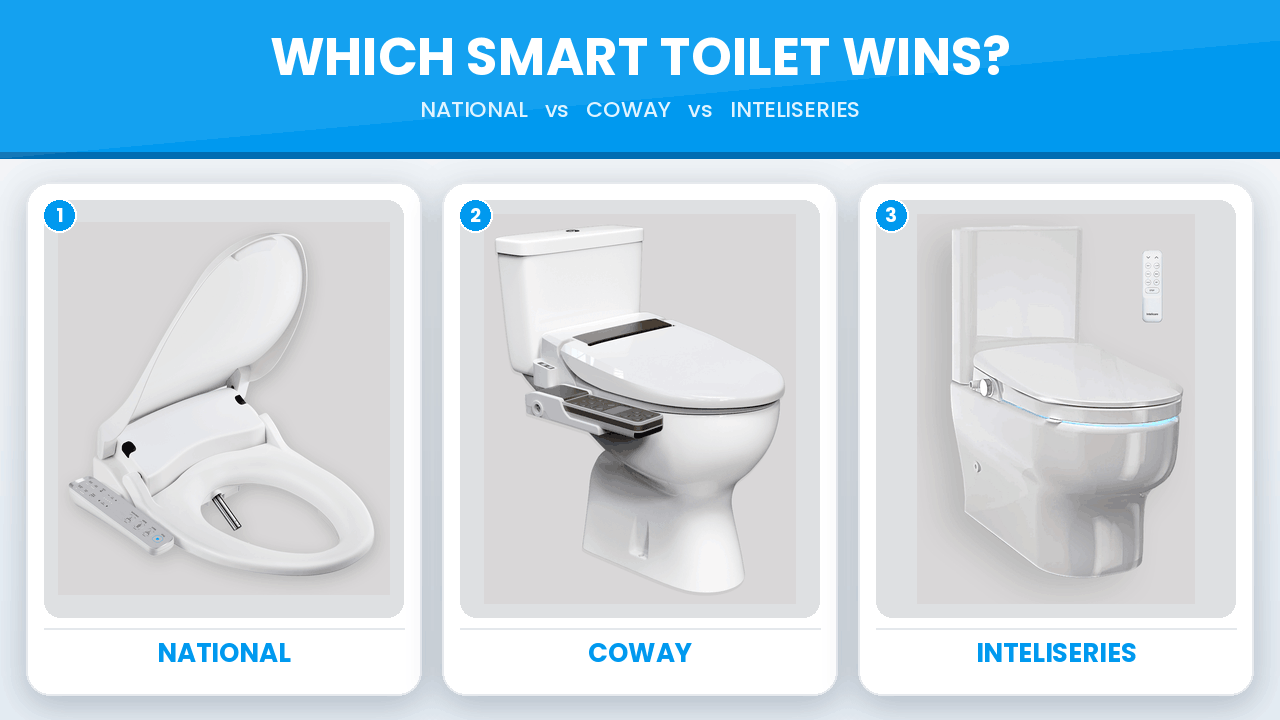
Coway vs National vs InteliSeries: Which bidet brand is right for you?
18 September 2026
Bidet comparison
If you’re comparing Coway, National and InteliSeries bidets, you’ll quickly notice that each brand comes with its own strengths. The harder part is understanding how those differences translate to your home and the way you plan to use your bidet. At Bidet Specialists Perth, we’ve supplied and installed models from each range, so we know […]